
The First Civilization
The Valley of the Creator
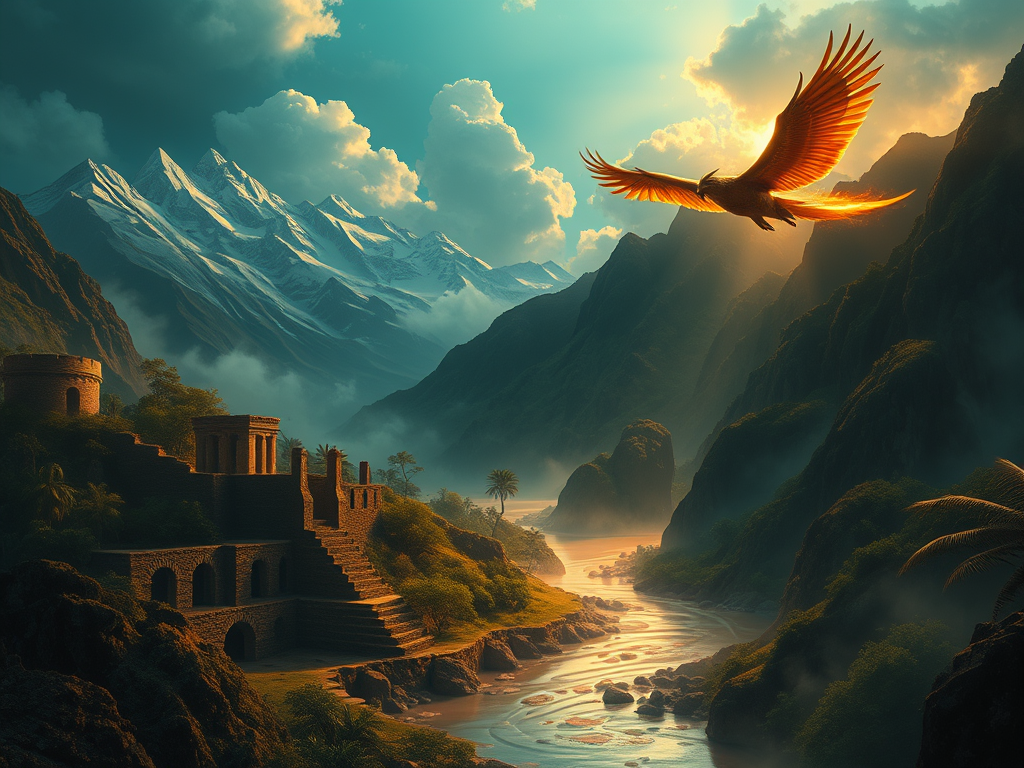
During the Age of Creation, after Bhava pressed form and purpose upon the world, the races of Einarth first arrived at the threshold of the Valley of the Creator. The valley itself, clad in fertile terraces shaped by rivers and framed by high peaks seemed to radiate tranquility. No tribe or traveler entered its bounds without feeling a subtle reminder of the presence of the Creator.
Bhava himself wandered the valley’s edge and heart, at times taking the shape of a wandering storyteller, a wise teacher, or a helpful stranger. His laughter was said to soothe disputes before they kindled.
Early Government and Law
The presence of Bhava aided understanding among the residents of the valley. He established common rites for the tending of the fields and forests. He oversaw the first Treaty of Shared Custom, a compact binding all races to uphold fair harvests and resolve disputes through debate or ritual rather than violence.
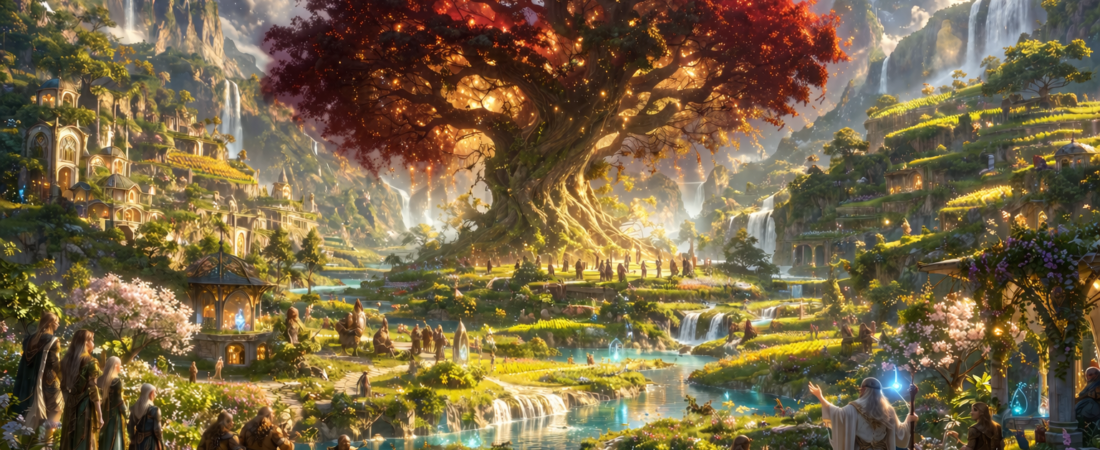
No race dominated in the valley. The first councils rotated, membership determined by a lottery of clans. Disputes were settled in the open under the outstretched branches of the Creator’s Tree, a mighty spirot tree said to have grown from a seed slipped into the earth by Bhava himself.
Punishments for wrongdoing rarely went beyond restitution and public shaming. In rare cases of grave offenses, the council would declare a season of silence, during which the wrongdoer lived among the valley’s animals, learning humility and the wisdom of animal company.
Customs and Traditions
Customs evolved quickly. In spring, Rith’yar planting rites mingled with Elven renewal ceremonies. At midsummer, Dwarves organized stone-lifting games beside human fairs featuring storytelling contests and juggling. During winter’s darkest stretch, all races gathered for the Night of Candles—each household fashioning a light to carry down to the Mirror Stone, which the youngest set alight at midnight.
In this peaceful age, the council encouraged the blending of traditions. Marriages across heritage lines took place, celebrated with days-long festivities and the planting of heritage gardens.
Communal homes stood beside private dwellings. Each decorated by the inhabitants in whichever style pleased them, resulting in walkways lined with Rith’yar wind chimes, Dwarven lantern sconces, Elven climbing vines, and human murals depicting moments of shared labor and festival.
The Seasons Turn
Seasons passed, and the First Civilization became a tapestry impossible to unravel. The heights and terraces of the Valley of the Creator bore silent witness to these years. Fields and groves stretched in lush patterns along the slopes; streams reflected the laughter and songs of summer evenings.
From time to time, Bhava would appear; at the birth of a child, at the settlement of a dispute, or simply on a rainy afternoon, asking for bread. All the valley’s inhabitants honored him with the persistent labor of peace and the stories they shared and cherished.
This era, as preserved through human archives, Dwarven records, Elven song, and Rith’yar oral lore, would be remembered as an age of unmatched prosperity, wisdom, and peace. Even in the centuries and calamities to come, it would stand as the golden measure against which all later societies would be compared.