
The Poem of Creation (attributed to Dira, the Clear-Voiced during the Age of Exploration):
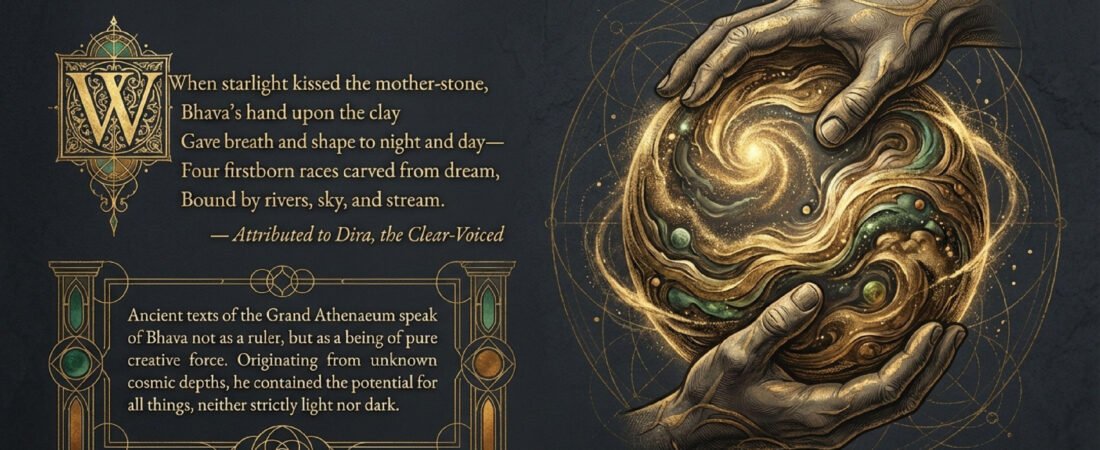
When starlight kissed the mother-stone,
Bhava’s hand upon the clay
Gave breath and shape to night and day
Four firstborn races carved from dream
Bound by rivers, sky, and stream.
The Age of Creation
Before the dawn of the world, there was only the void and raw chaos. The First God, Bhava, looked upon this void and dreamed of the possibilities. From his thoughts rose Einarth—a world of endless wonder.
The Age of Creation spanned approximately the first 100 years of existence. Bhava began by creating the heavens and placing the stars and moons within the sky. He sculpted Einarth to his liking, carefully shaping the land and the sea. He walked this new world breathing life into it, filling it with all manner of plants and animals.
Drawing upon different aspects of himself for inspiration, Bhava crafted the four original mortal races: the graceful Elves, the resilient Dwarves, the nature-bound Rith’yar, and the ambitious Humans. Each race was bestowed with their own unique gifts and purposes, and Bhava granted them dominion over the lands and seas of Einarth.
The Elves
Tall, slender, and possessing ethereal beauty with pointed ears and large almond-shaped eyes, Elves were blessed by Bhava with inherent grace and an exceptionally long lifespan of over a thousand years. This divine longevity grants them a patient, long-term perspective on existence, allowing them to deeply master almost any skill and cultivate refined cultures centered around ancient traditions and harmony with nature. In the current age, the Age of Heroes, this can make them appear aloof or arrogant to younger races, though they remain loyal companions and formidable, agile warriors to those who earn their trust.
The Dwarves
Standing between four and five feet tall with broad shoulders, dense muscles, and sturdy bones, Dwarves were granted the divine gifts of craft and resilience by the Creator. Living for 350 years or more, their lifespan fosters a highly patient and methodical approach to their unparalleled metalworking, stonecraft, and engineering. Today, the fallout of the Age of Chaos has fractured their once-unified society into three distinct cultures. The traditional Cave Dwarves continue to reside within deep, impregnable underground holds, fiercely guarding their ancient ways and measuring success by sheer endurance. The Hill Dwarves have adapted to the surface, building open, terraced cities and serving as pragmatic, trade-focused bridges to the other races. In stark contrast, the Forest Dwarves retreated into ancient woods; driven by a bitter blood-oath of retribution, they have become fearsome, secretive guerrilla fighters who seamlessly merge their ancient stone-craft with root and bark.
The Rith’yar
The Rith’yar are a lithe, halfling race standing three to four feet tall, distinguished by fine features, bright eyes, and light tufts of hair on their rounded ears. Bestowed with a divine connection to the natural world, they live for about 150 years, a lifespan that perfectly balances youthful energy with the wisdom of experience. Today, these traits make them exceptional farmers, herbalists, and trackers who live in close-knit, rural communities perfectly integrated into the landscape, serving as valued advisors in sustainable living while holding fiercely to their traditions despite a dark history of exile and persecution.
The Humans
Humans were bestowed with the divine gifts of adaptability and ambition. Bound by a relatively short average lifespan of approximately 80 years, this brevity fuels a relentless drive to explore, build, and press beyond boundaries. In the current age, this inherent ambition makes them the most widespread and populous race on Einarth, propelling much of the world’s changing dynamics through their ingenuity and determination, while also making them susceptible to greed, moral corruption, and a desperate thirst for power and riches.
A New Era
Immediately following the Age of Creation, Bhava withdrew to the heavens so he could watch the mortal races adapt, build their societies, and alter their environments without his direct interference. This led to more than three thousand years of peaceful coexistence which became known as The Age of Exploration.