
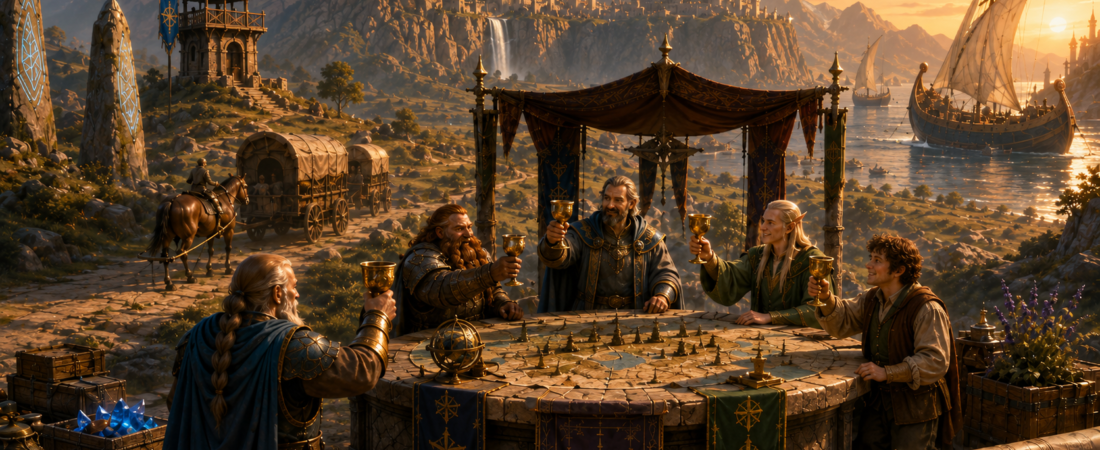
As new settlements took root, paths worn by the first traders grew into true roads marked by waystones and guarded outposts. Merchants became as vital as explorers. Human traders carried grain and textiles, bartering with Dwarven caravans laden with salt and iron, or Elven ships bearing potent medicines and intricate art.
Caravans carried more than goods—they bore news, rumor, and the subtle blending of customs. Songs learned in one tongue reappeared with new lyrics leagues away. Marriages united distant lineages, and festivals borrowed colors and dishes from one another.
Explorers and scholars mapped the world’s breadth, with Elven, Dwarven, and Human cartographers competing to chart every river and promontory. The very act of mapping became a matter of prestige.
Yet as expansion matured, disputes over borders, trading privileges, mining rights, and river access inevitably arose. Councils convened at neutral sites—often in the Valley of the Creator itself—to debate and negotiate.
The Humans pressed their claims with vigor, sometimes settling disputes through song or competitive games. Dwarves often acted as arbiters, leveraging trade and metalcraft. Elves guarded their borders with quiet vigilance, while the Rith’yar spoke in parables that invited deeper thought.
With expansion also came discovery: rich herds, seams of copper and silver, healing willow-bark, and the fabled bluefire quartz. These resources strengthened the web of interdependence even as they sometimes shifted the balance of power.
Trade bound the lands together, yet also tested the harmony between races. Next week, we’ll reflect on how this age transformed culture and myth.